Organizing Committee
- Sipos-Onyestyák Nikoletta
- Szikora Katalin
- Sisa Krisztina
- Hadusfalvy Polett Veronika
- Mezei Dániel
- Perényi Szilvi
Scientific Committee
- Szikora Katalin
- Sipos-Onyestyák Nikoletta
- András Killyéni
- Bukta Zsuzsa
- Farkas Péter
- Simón Sanjurjo
- Lorenzo Venuti
- Fabien Archambault:
This email address is being protected from spambots. You need JavaScript enabled to view it. - Pompiliu-Nicolae Constantin:
This email address is being protected from spambots. You need JavaScript enabled to view it. - Erminio Fonzo:
This email address is being protected from spambots. You need JavaScript enabled to view it. - Angela Teja:
This email address is being protected from spambots. You need JavaScript enabled to view it. - Arnd Krüger:
This email address is being protected from spambots. You need JavaScript enabled to view it. - Francesca Tacchi:
This email address is being protected from spambots. You need JavaScript enabled to view it. - Nicola Sbetti:
This email address is being protected from spambots. You need JavaScript enabled to view it. - Kamil Potrzuski:
This email address is being protected from spambots. You need JavaScript enabled to view it. - Bugdan Popa:
This email address is being protected from spambots. You need JavaScript enabled to view it. - Lidia Lesnykh:
This email address is being protected from spambots. You need JavaScript enabled to view it. - Deborah Guazzoni:
This email address is being protected from spambots. You need JavaScript enabled to view it. - Enrico Landoni:
This email address is being protected from spambots. You need JavaScript enabled to view it. - Eleonora Belloni:
This email address is being protected from spambots. You need JavaScript enabled to view it.
30th Congress of the European Committee for Sports History (CESH)
Budapest, Hungary | 9-11 June 2027
Hosted by the European Committee for Sports History (CESH), the Hungarian University of Sports Science (HUSS), and the SPIRIT Olympic Studies and Research Centre
Stars, Wars and Sporting Stardom
The European Committee for Sports History (CESH), in cooperation with the Hungarian University of Sports Science (HUSS) and the SPIRIT Olympic Studies and Research Centre, invites scholars, researchers, and postgraduate students to submit abstracts for the 30th Annual CESH Congress, to be held in Budapest, Hungary, from 9 to 11 June 2027.
The 2027 Congress takes place in a year marked by several significant anniversaries that provide an opportunity to reflect on the history, development, and social significance of sport:
- 30th Congress of the European Committee for Sports History (CESH)
- 100th anniversary of the birth of Ferenc Puskás (1927-2006), one of the most influential Hungarian sporting icons of the twentieth century
- 50th anniversary of the release of Star Wars (1977-2027), a cultural phenomenon that transformed popular understandings of heroism, rivalry, spectacle, and myth-making
Inspired by these anniversaries, the Congress theme, "Stars, Wars and Sporting Stardom", invites participants to examine the individuals, institutions, organizations, and cultures that have shaped the history of sport. The congress seeks to explore how sporting heroes, governing bodies, clubs, federations, educational institutions, media organizations, and political actors have contributed to the creation of sporting narratives, identities, conflicts, and collective memories.
The concept of "stars" directs attention not only to celebrated athletes and coaches but also to the broader networks and institutions that create, manage, promote, and preserve sporting excellence. Likewise, the notion of "wars" encompasses not only sporting rivalries and competitive struggles but also political, ideological, cultural, and symbolic conflicts in which sport has played an important role.
The Congress welcomes contributions that examine sport as a historical, cultural, political, social, educational, and media phenomenon. We particularly encourage interdisciplinary approaches that connect sport history with cultural history, political history, media studies, sociology, education, heritage studies, visual culture, and related fields.
Suggested Themes
Athletes and Coaches as Historical Actors
- Sporting stars as agents of social, cultural, or political change
- Leadership, charisma, and authority in sport
- Coaches as educators, strategists, ideologues, and nation-builders
- Biographical and microhistorical approaches to athletes and coaches
Stardom, Media, and Representation
- The creation of sporting celebrities through media
- Sport in film, television, documentary, literature, and visual culture
- Heroization, myth-making, scandal, and collective memory
- Gendered, racialized, and class-based representations of sporting fame
- The commercial production of sporting stars
Sport, Politics, and Ideological Conflict
- Sport and nation-building
- Political uses of sport in democratic and authoritarian societies
- Boycotts, protests, defections, and symbolic confrontations
- Colonial, post-colonial, and transnational perspectives
Competition, Rivalry, and Conflict
- Historical sporting rivalries
- Violence, discipline, and regulation in sport
- Military influences on sporting culture and training systems
- Sport during and after periods of war and political conflict
- Sport as a vehicle for reconciliation and peace-building
Sport, Society, and Cultural Heritage
- Fan cultures and supporter identities
- Memory, commemoration, and heritage in sport
- Museums, archives, and collections
- Local, national, and global dimensions of sporting culture
Beyond the Arena
- Sport in art, music, fashion, and performance
- Commercialization and branding
- Digital sport history and online communities
- Social media, gaming, and new forms of sporting engagement
- Future directions in sport history research
Open Topic Session
In keeping with the traditions of CESH, proposals addressing any aspect of sports history are also welcome. Contributions are not required to engage directly with the congress theme and may explore broader historical questions related to sport, physical culture, leisure, movement cultures, education, and society.
Submission Guidelines
Participants are invited to submit an abstract of up to 300 words, together with a short biographical note.
Deadline for abstract submission: 31 January 2027
Notification of acceptance: 15 March 2027
Join Us in Budapest
In addition to a rich academic programme, the congress will offer a variety of social and cultural events, providing opportunities for networking, professional exchange, and experiencing the sporting and cultural heritage of Budapest.
We warmly invite scholars from Europe and beyond to join us in celebrating the 30th CESH Congress and contributing to new perspectives on sport, society, memory, institutions, and sporting stardom.
Participants of the conference may consider the following options for accommodation. We listed several price options and indicated the distance from the conference venue.
Mercure Budapest Castle Hill (Krisztina krt. 41-43, 1013, Budapest, Hungary, 1,3km)
- This hotel is 10 minutes walking distance from the conference site.
- Guests are welcome to park vehicles outside the hotel entrance and to enjoy the brand-new design inspired by the colourful and lively streets of Budapest. The hotel is well located, the Castle District can be reached by walking through a nice park in 5 minutes. It has, direct access to public transport, such as buses, metro lines and the “Déli pályaudvar” train station. Easy to reach by car from M1/M7 highways. Ferenc Liszt International Airport is only 27 km’s away.
- For more info and for booking, please visit here
Novotel Budapest City & Budapest Congress Center (Alkotás u. 63-67, 1123, 450m)
- The Hotel is within 5 minutes walking distance from the university, nice quality rooms and spaces, spa, bars and cafes.
- For more info please click here
Hotel Mediterrán (Budaörsi út 20a, 1118), 1,3km
- Walking distance from conference site.
- website
Ibis Budapest Castle Hill (Krisztina krt., 1013), 1,1km
- Walking distance from conference site
- website
Gold Hotel Budapest (Hegyalja út 14, 1016), 1,2km
- Walking distance from conference site.
- website
Hotel Bara (Hegyalja út 34-36, 1118) 1,8km
- Walking distance from conference site.
- website
Hotel Charles (Hegyalja út 23, 1016) 1km
- Walking distance from Conference Site.
- website
Helios Panzió (1121 Budapest, Lidérc u. 5.), 4,5 km
- 25 minutes by public transportation from conference site
- This is a nice family run hotel with 11 double rooms (1-2 persons) and 6 apartmant studios (1-4 persons). The friendly,cosy rooms. Rooms with spacious terrace with magnificent view to Budapest (on request).
- website: Helios Apartman Hotel (heliospanzio.hu)
Jagelló Hotel (Jagelló út 38, 1124), 850m,
- Walking distance from conference site
- See website for prices
Ábel Panzió (Ábel Jenő u. 9, 1113) 3,3km
- Walking distance or 3 stops with public transportation from conference site
- See website for prices
Hotel Walzer and Restaurant (Németvölgyi út 110, 1124), 2,5 km
- Walking distance or 3 stops with public transportation from conference site
- See website for prices
Hungarian University of Sports Science (HUSS)
The Hungarian University of Sports Science (HUSS) is Hungary's oldest and most prestigious higher education institution dedicated to sport, physical education, and sport sciences. Established in 1925 as the Royal Hungarian College of Physical Education, the university was created as part of the educational reforms initiated by Count Kunó Klebelsberg, Minister of Religion and Public Education, whose vision was to strengthen Hungary through education, science, and physical culture.
The ceremonial opening of the institution took place in November 1925, marking the beginning of organised higher education for physical education teachers and sport professionals in Hungary. During the following decades, the institution continuously expanded its educational profile, research activities, and international connections. A major organisational transformation took place in 2000, when the institution became the Faculty of Physical Education and Sport Sciences of Semmelweis University. Following more than a decade within Hungary's leading medical university, it regained its independence in 2014 under the name University of Physical Education, reflecting the growing significance and maturity of sport sciences as an academic field. Since 2021, the institution has operated under its current name, the Hungarian University of Sports Science (HUSS).
Today, HUSS is recognised as the leading centre of sport sciences in Hungary and one of the most prominent sport-focused universities in Central Europe. The university offers a wide range of undergraduate, graduate, postgraduate, and doctoral programmes, including:
- Physical Education Teacher Education
- Coaching Education
- Sport Organization
- Human Kinesiology
- Recreation and Lifestyle Promotion
- Adapted Physical Activity
- Mental Trainer Programmes
- Sport Coaching Programmes in numerous Olympic and non-Olympic sports
- Health Promotion and Exercise-related Studies
- Doctoral Education in Sport Sciences
The university maintains close partnerships with the key institutions of Hungarian sport. Strategic partners include the Hungarian Olympic Committee (MOB), the Hungarian Society of Sport Science (MSTT), the State Secretariat Responsible for Sport, national sport federations, professional associations, Paralympic organisations, and numerous domestic and international stakeholders. These partnerships contribute significantly to education, research, coach development, sport governance, and the advancement of sport policy and sporting excellence in Hungary.
A major milestone in the university's international development was reached in 2026 with the establishment of the SPIRIT Olympic Studies and Research Centre. Created with the support of the IOC Olympic Studies Centre, the new centre serves as a national and international hub for research, education, and scholarly cooperation in the fields of Olympic Studies, sport history, Olympism, sport governance, and the social and cultural dimensions of sport. The centre further strengthens HUSS's long-standing commitment to Olympic values, Olympic education, and international academic collaboration.
As it celebrates more than one hundred years of academic excellence, HUSS continues to build bridges between sport, education, science, and society. The university is proud to host the 30th Annual Conference of the European Committee for Sports History (CESH) and looks forward to welcoming participants from across Europe and beyond to Budapest in June 2027.
 Dr. Heather L. DICHTER is associate professor of sport history and sport management in the International Centre for Sports History and Culture at De Montfort University in Leicester, United Kingdom. She earned her PhD from the University of Toronto and has previously taught at universities in the United States, Canada, Norway, and Switzerland. She has published extensively on the history of sport with a focus on Germany, the Cold War, the Olympic Games, and diplomacy. She is the author of Bidding for the 1968 Olympic Games: International Sport’s Cold War Battle with NATO (University of Massachusetts Press, 2021), which won the Lord Aberdare Literary Prize from the British Society of Sports History, and editor of Soccer Diplomacy: International Relations and Football Since 1914 (University Press of Kentucky, 2020). She is the co-editor of Football Diplomacy Beyond Europe: Infrastructure, Spectacle, and the Politics of the Global Game since 1945 (University of Tennessee Press, 2027) with Michelle Sikes, of Berlin Sports: Spectacle, Recreation, and Media in Germany’s Metropolis (University of Arkansas Press, 2024) with Molly Wilkinson Johnson, of The Olympic Winter Games at 100: Challenges, Complexities, and Legacies (Routledge, 2024) with Sarah Teetzel, of Diplomatic Games: Sport, Statecraft and International Relations since 1945 with Andrew Johns (University Press of Kentucky, 2014), and of Olympic Reform Ten Years Later (Routledge, 2012) with Bruce Kidd. She is also the Managing Editor of The International Journal of the History of Sport.
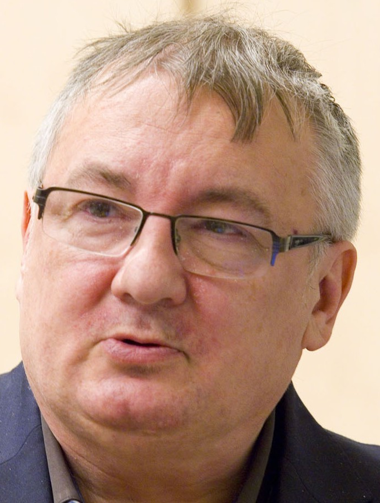 Tamás DÉNES is a football historian, former editor-in-chief of Nemzeti Sport and A Színes Sport, and a sports journalist honored with the Feleki Prize, the Szepesi Prize, and the Ezüstgerely Prize.
He is the author or co-author of one hundred books on football; most notable among these are his five-volume series on the history of Hungarian football and his five-volume series on the history of international football, both co-authored with Éva B. Bába and Mihály Sándor. Among his recent works, Az Aranycsapat – másképpen (“The Golden Team – From a Different Perspective”) stands out.